

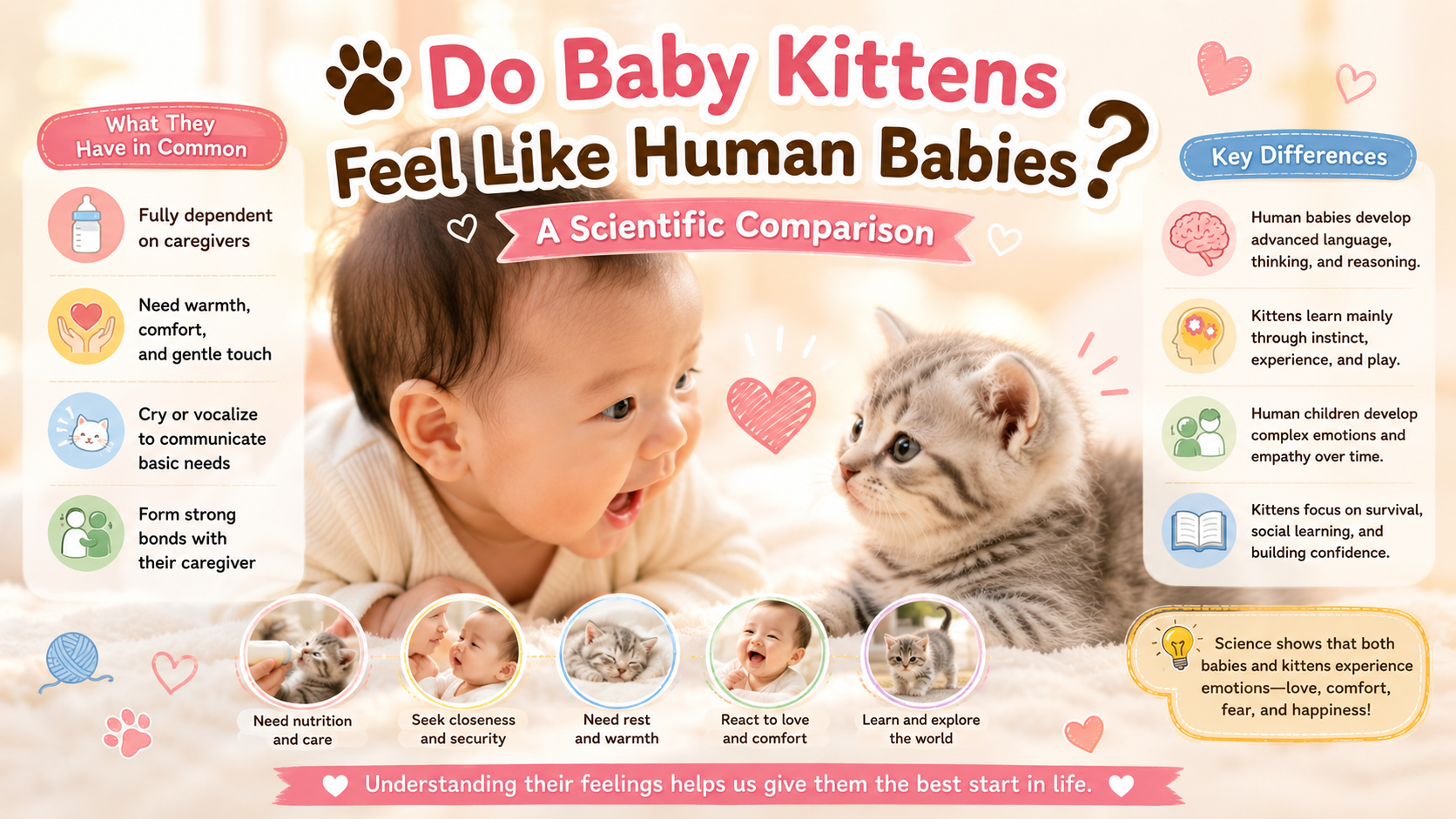
Have you ever watched a newborn kitten cry for its mother, seek warmth, or cuddle close to its siblings and wondered whether it experiences emotions similar to a human infant?
The answer, according to scientific research, is both yes and no.
Because cats and humans are both mammals, they share certain biological and neurological characteristics. This means that baby kittens and human infants display several similar emotional and behavioral responses during early development. However, there are also important differences in how their brains develop and how they perceive the world.
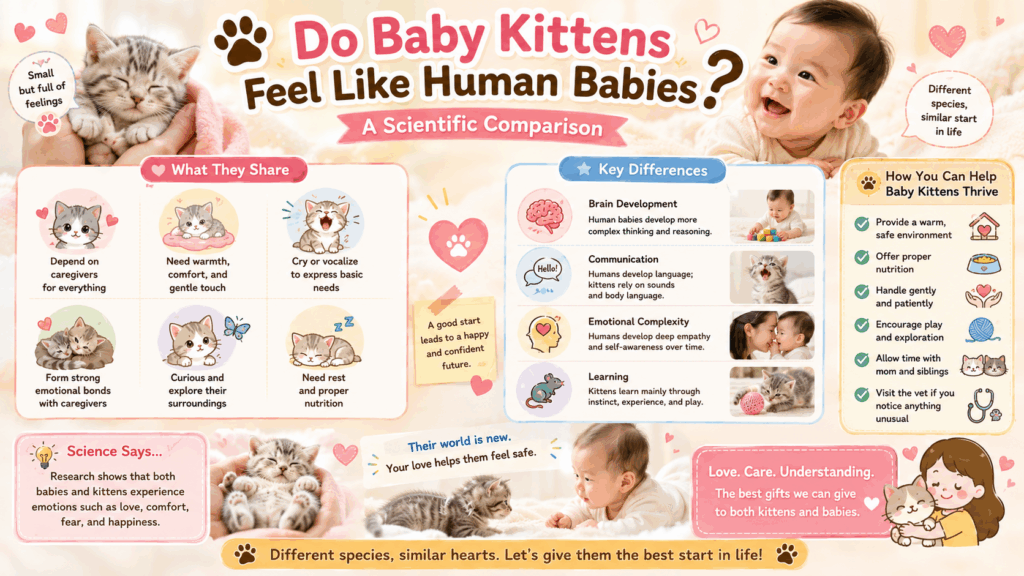
🍼 Similarities Between Baby Kittens and Human Infants
1. Both Depend Completely on Caregivers
Newborn kittens are unable to:
- Regulate their body temperature effectively.
- Find food on their own.
- Walk or move independently.
- Survive without their mother or a caregiver.
Human babies are similarly dependent on adults for every aspect of their care during the first months of life.
Veterinary experts explain that the first weeks of a kitten’s life are critical for healthy physical, neurological, and behavioral development. Proper care during this stage has long-term effects on the cat’s confidence and ability to adapt later in life.
2. Both Need Warmth and Gentle Touch
Baby kittens naturally sleep close to their mother and littermates to stay warm and feel secure.
Likewise, human infants benefit from gentle holding, cuddling, and skin-to-skin contact, which help reduce stress and strengthen emotional bonding with caregivers.
These behaviors are common among many mammal species and are considered essential for healthy early development.
3. Crying Is Their Primary Way to Communicate
Human babies cry when they are:
- Hungry
- Cold
- Uncomfortable
- In pain
- Seeking comfort
Baby kittens also vocalize for many of the same reasons, including:
- Calling for their mother
- Hunger
- Feeling cold
- Fear or insecurity
Although kitten vocalizations are much simpler than human language, they effectively communicate basic needs to their mother or caregiver.
❤️ Do Baby Kittens Have Emotions?
Scientific evidence suggests that baby kittens experience basic emotions.
These include:
- Fear
- Comfort
- Stress
- Curiosity
- Interest
- Attachment to their mother or caregiver
Veterinary behavior specialists explain that cats can display clear emotional responses related to stress, anxiety, safety, and social bonding. These behaviors reflect activity within emotional centers of the brain, although feline emotions are generally less complex than those of humans.
🧠 How Are They Different from Human Babies?
Despite these similarities, important differences exist.
As human children grow, they develop:
- Language
- Abstract thinking
- Planning abilities
- Empathy
- Complex reasoning
- Self-awareness
Cats, on the other hand, primarily learn through:
- Experience
- Play
- Observation
- Instinct
- Socialization
While cats are intelligent and capable of learning, they do not develop the advanced cognitive abilities found in humans.
🐾 Early Life Experiences Matter
Animal behavior experts identify approximately 2 to 9 weeks of age as a crucial socialization period for kittens.
During this time, positive experiences such as:
- Gentle human handling
- Interaction with their mother and littermates
- Safe surroundings
- Age-appropriate play
can help kittens grow into confident, friendly, and well-adjusted adult cats.
Conversely, kittens separated from their mother too early or deprived of normal social experiences may be more likely to develop fearfulness or behavioral problems later in life.
👨👩👧 Tips for Caring for a Young Kitten
If you are raising a young kitten, consider these basic recommendations:
- Provide a warm and safe environment.
- Feed an age-appropriate diet.
- Handle the kitten gently and calmly.
- Encourage safe play and exploration.
- Avoid separating kittens from their mother too early unless necessary.
- Consult a veterinarian if the kitten becomes lethargic, refuses food, or shows unusual behavior.
📌 Conclusion
Baby kittens and human infants share several important characteristics during early development. Both depend heavily on caregivers, communicate through vocalizations, seek warmth and comfort, and form strong emotional bonds with those who care for them.
However, their brains develop differently. Human children eventually acquire advanced language, reasoning, and emotional understanding, whereas kittens rely primarily on instinct, experience, and social learning.
Providing proper care, warmth, nutrition, and positive social experiences during the first weeks of a kitten’s life plays a vital role in supporting healthy physical development, emotional well-being, and lifelong behavior.
📚 References
Government Agencies and Public Institutions
- American Veterinary Medical Association (AVMA). Feline Development: From Kitten Kindergarten Onward. https://www.avma.org/
- National Institutes of Health (NIH), U.S. National Library of Medicine (PubMed Central). Behavioral Awareness in the Feline Consultation. https://pmc.ncbi.nlm.nih.gov/
- Department of Livestock Development (Thailand). Information on animal health, welfare, and responsible pet ownership. https://www.dld.go.th/
Academic Institution
- Cornell Feline Health Center, Cornell University. Information on feline behavior and development. https://www.vet.cornell.edu/
Disclaimer – Coohfey.com
This article is intended for general educational purposes only and is based on information from reputable government agencies, academic institutions, and veterinary resources. It should not be considered a substitute for professional veterinary advice, diagnosis, or treatment. If your kitten or pet shows signs of illness, unusual behavior, or requires medical attention, please consult a licensed veterinarian for appropriate evaluation and care.